
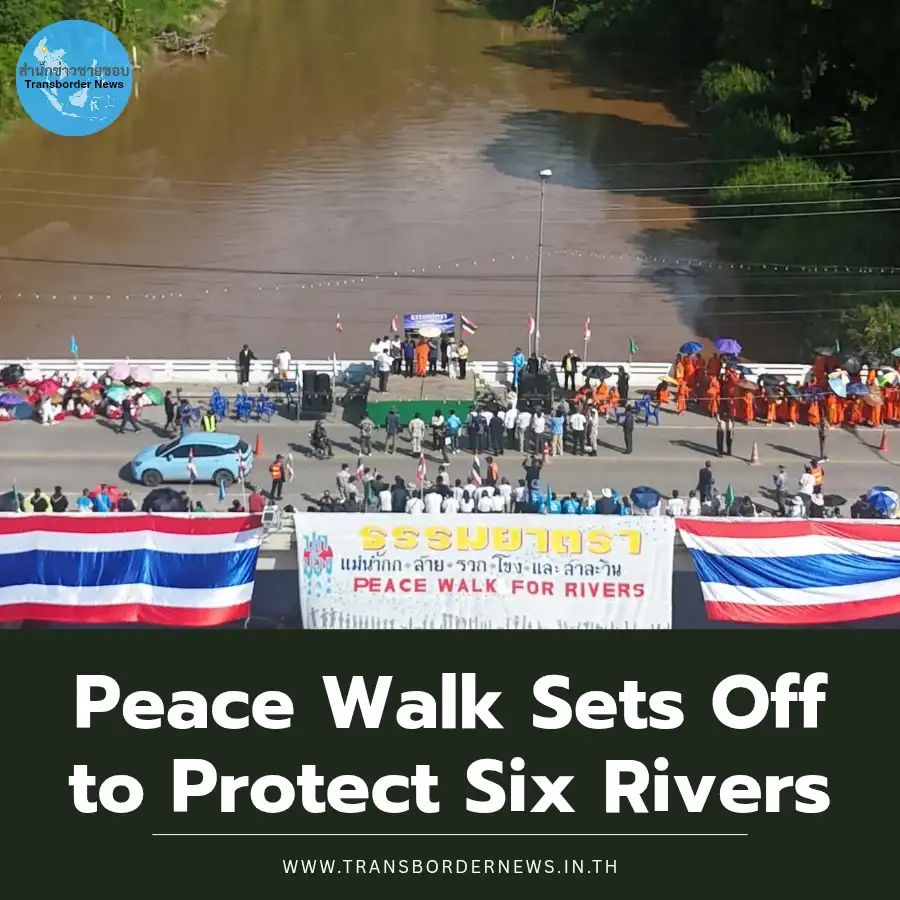
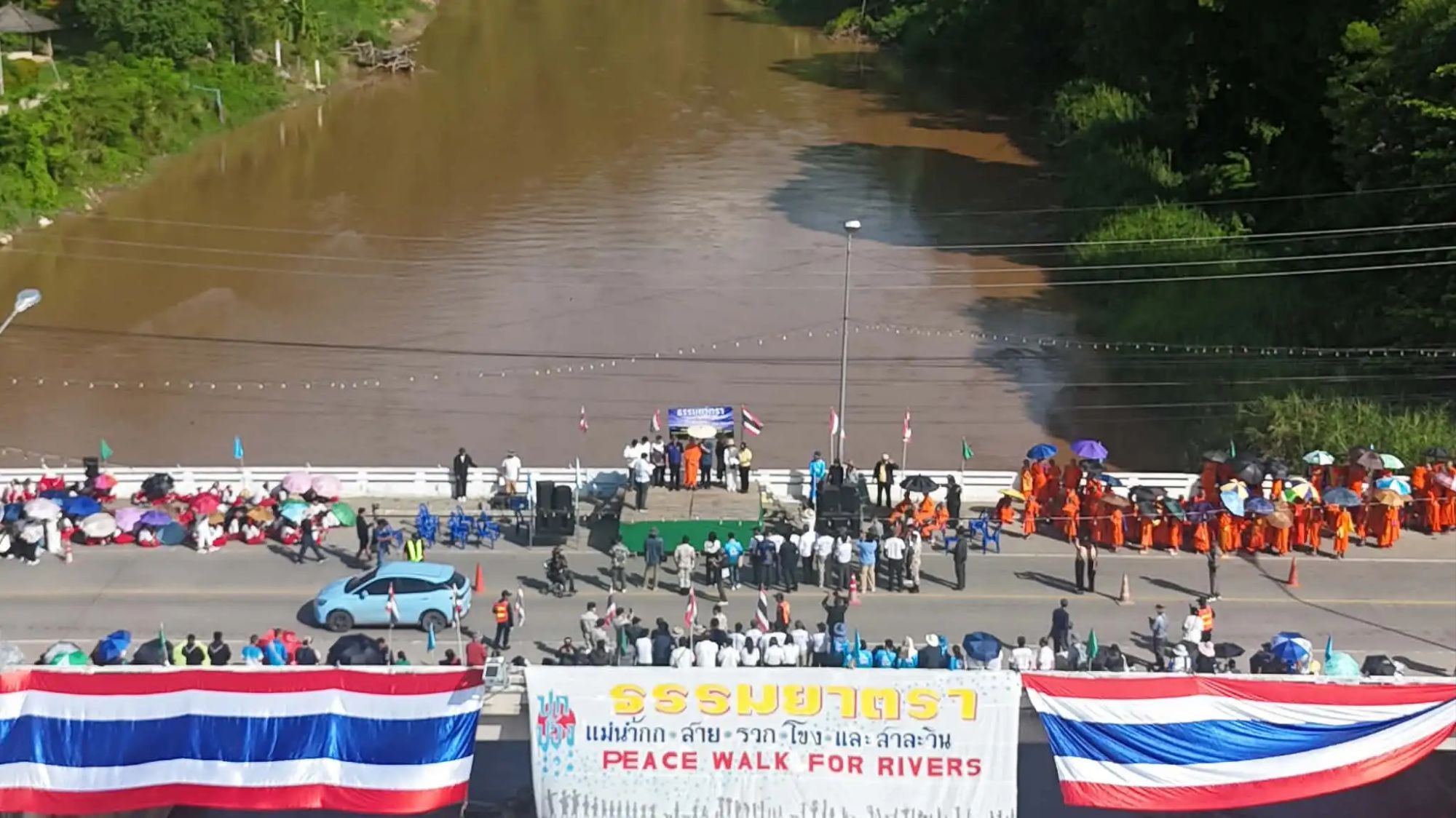
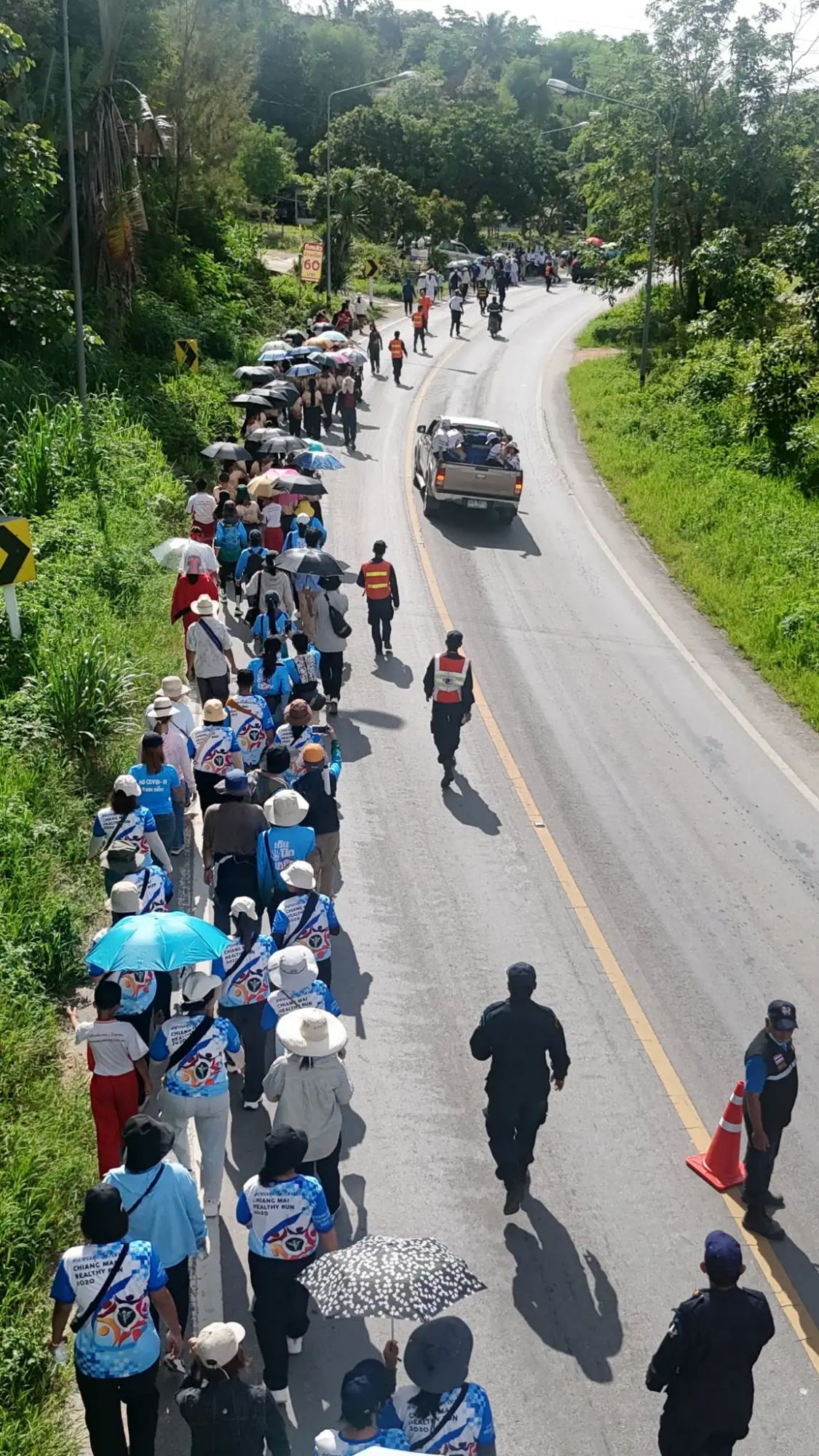
THA TON, Chiang Mai, Thailand, May 31, 2026 – Hundreds of monks and novices joined thousands of residents, students and community members on Saturday as a six-day Peace Walk for Rivers began along the Kok River, calling on governments to urgently address transboundary contamination linked to mining activities in neighbouring countries.
The event, held on Visakha Bucha Day, marks the start of a 60-kilometre “Peace Walk for Rivers” from Tha Ton in Chiang Mai to Chiang Rai city. Organised by the People’s Network for the Kok, Sai, Ruak, Mekong and Salween Rivers, in partnership with local organisations and authorities, the walk will continue until June 5, World Environment Day.
Speaking at the opening ceremony, former Chiang Rai senator Tuenjai Deetes said environmental destruction caused by poorly regulated rare earth mining and other extractive industries had spread across headwater areas in neighbouring countries and was now affecting multiple transboundary rivers.
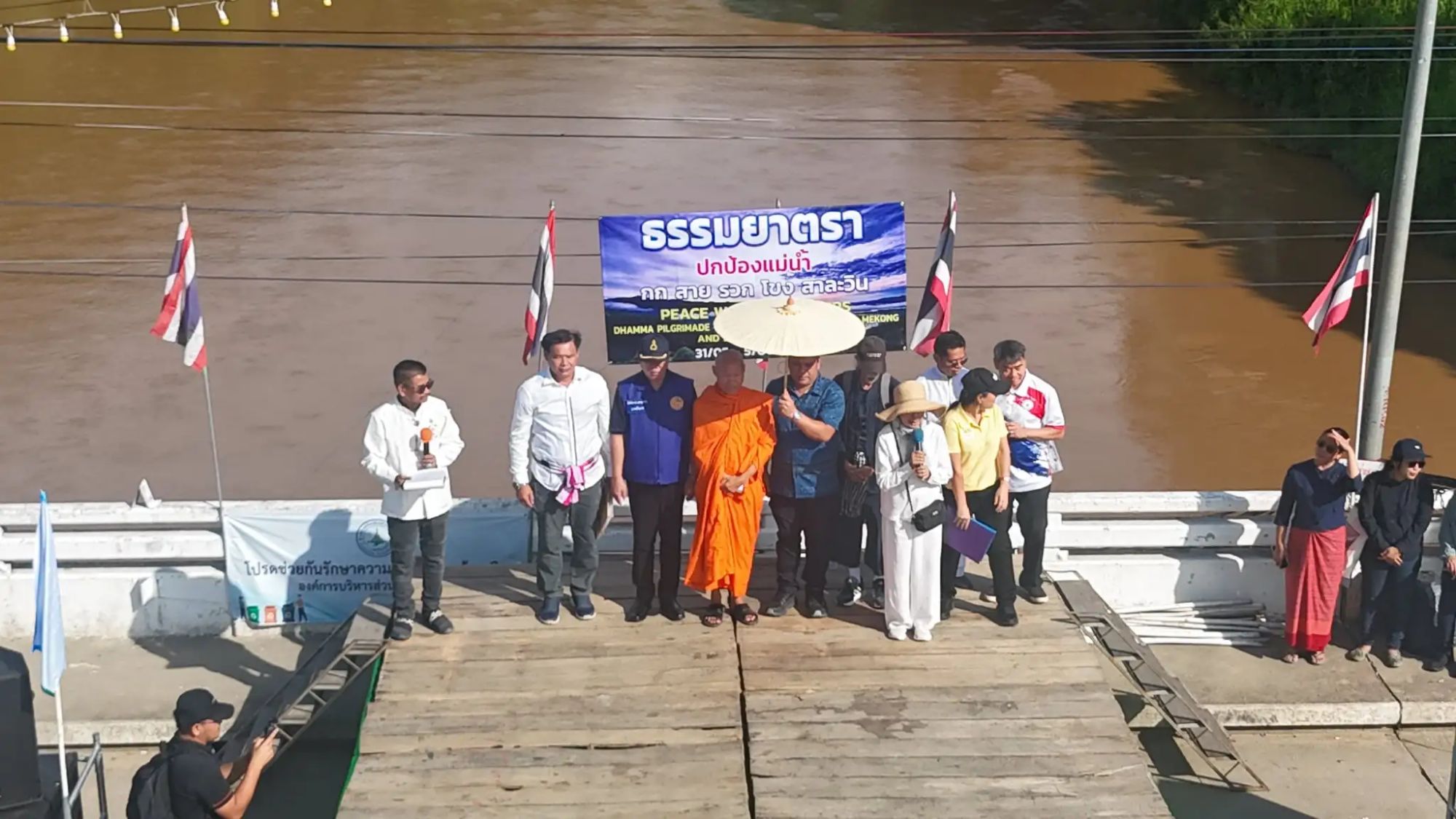

“On this Visakha Bucha Day, we affirm that dhamma and nature are one and the same. Human beings are part of nature and have a duty to protect it,” she said.
Ms Tuenjai said toxic contamination linked to mining activities had now affected six major rivers in the region, including the Kok, Sai, Ruak, Mekong, Salween and Kraburi rivers. She urged governments and industries involved in global critical minerals supply chains to recognise the growing environmental and social impacts of mining.
Boonroj Kongkaew, chief executive of Tha Ton Subdistrict Administrative Organisation, said communities had lived with concerns over river contamination for nearly two years, leading to declining public confidence in water use and growing anxiety among local residents.
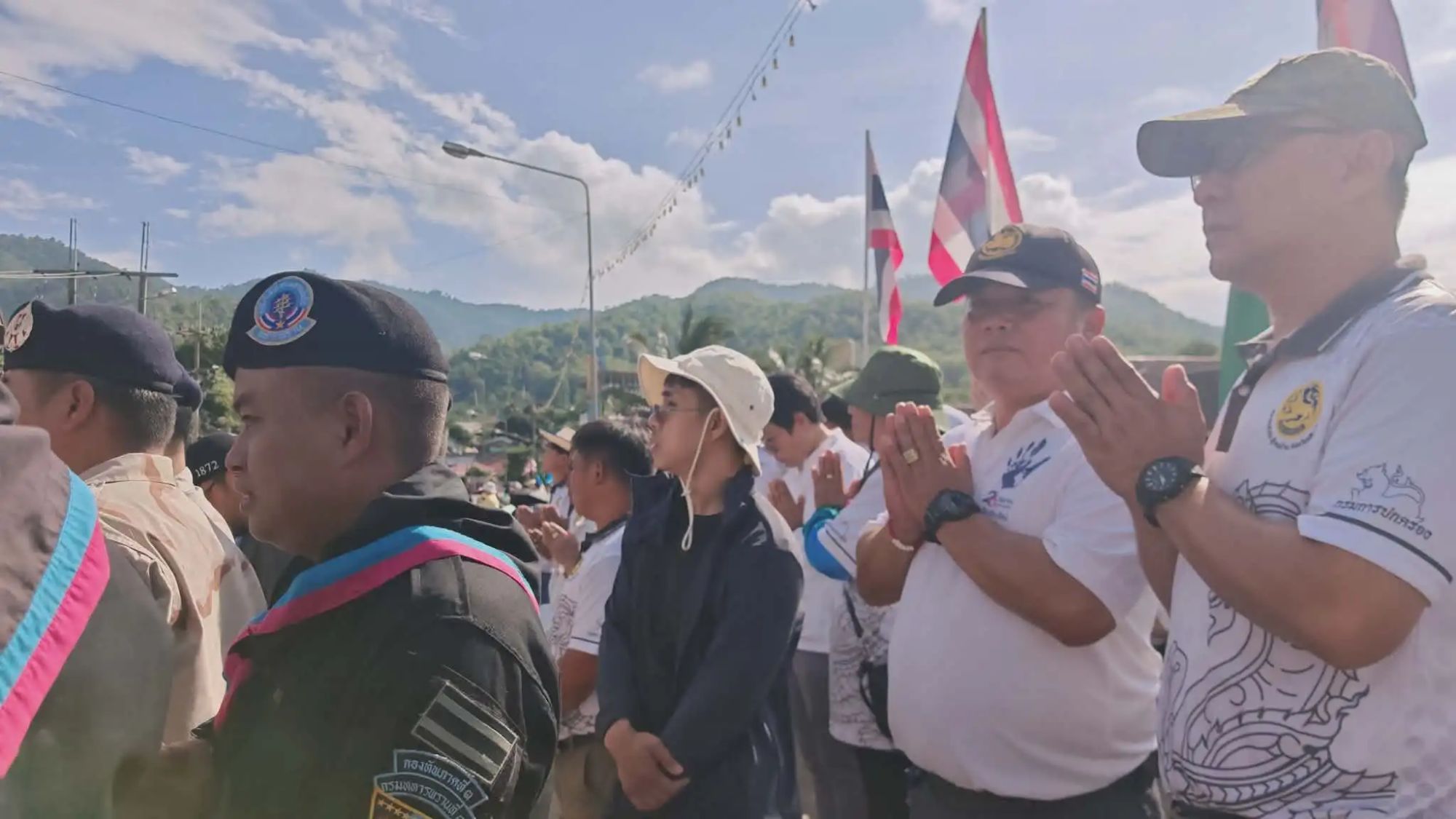
“Rivers that once sustained communities are now facing serious challenges. This walk represents an important step in building cooperation to protect our waterways,” he said.
Sangrawee Suweerakarn, vice-chair of the Rom Bodhi Foundation, said organisers expected more than 4,000 people to participate throughout the six-day journey.
“The walk is intended to send a clear message to the government that this issue requires serious action. Rivers are the source of life and hope for local communities. Protecting rivers means protecting lives,” she said.
Mae Ai district chief Nitipakorn Saengsuwan said rivers connected communities across national borders but were now being affected by chemicals associated with upstream mining activities.
“The contamination threatens people’s well-being and security. Protecting and restoring these rivers is not the responsibility of any single agency but requires cooperation from all sectors,” he said.
Delivering a dhamma sermon on behalf of Chiang Mai’s senior Buddhist clergy, Phra Maha Nikhom Mahabhinikkhamano, assistant abbot of Wat Tha Ton, described the walk as a spiritual journey for the benefit of society.
“Nature is dhamma, and rivers are the mother of all life. Today the Kok, Sai, Ruak, Mekong and Salween rivers are facing a serious and interconnected crisis. Walking with dhamma is not merely a physical act but a commitment to perseverance in addressing the challenges faced by rivers and communities,” he said.
Niwat Roykaew, chairman of the Chiang Khong Conservation Group, described the event as a historic moment for communities in the Kok, Sai, Ruak, Mekong and Salween basins.
“We are walking to protect our rivers from toxic contamination caused by irresponsible activities. Along the way we will listen to the voices of affected communities and deliver their concerns directly to the government,” he said.
Mr Niwat called on Prime Minister and Interior Minister Anutin Charnvirakul to engage directly with affected residents and address their concerns.
“Our collective determination can create change so future generations can once again enjoy clean and healthy rivers. This is no longer only a local issue; it is a challenge facing the entire region,” he said.
Prior to the walk, the atmosphere was lively as an estimated 150–200 monks and novices led the procession, followed by thousands of schoolchildren and residents.
Mr Boonroj later said that more than a year after heavy metals were first detected in the Kok River, the situation remained unresolved. Residents continued to use river water with caution, while tourism – a major source of local income – had been severely affected.
“Every day, mining operations at the river’s headwaters continue releasing pollutants, yet there is still no clear solution from the authorities,” he said.
“We want the problem addressed at its source. Mining should be properly regulated and managed, not allowed to discharge toxic substances into rivers. Those with the power to act should solve the problem at its origin rather than dealing only with the consequences downstream.”